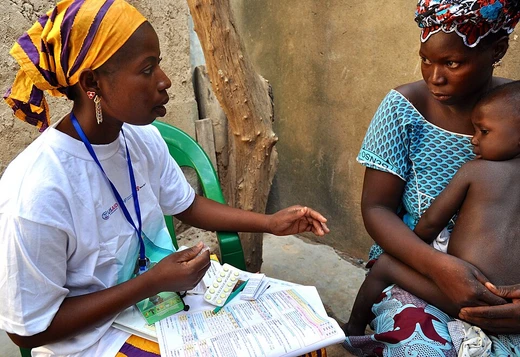
Preventive healthcare
Preventive healthcare aims to stop disease before it starts.

Preventive healthcare, also known as prophylaxis, involves measures taken to prevent diseases rather than treating them after they occur. It encompasses a range of strategies from primary, secondary, and tertiary prevention, and includes services such as screening tests, vaccinations, and health education.
- field
- Public health and medicine
- known_for
- Concept of primary, secondary, and tertiary prevention levels
- key_concept
- Primal prevention based on epigenetics
- leading_causes_preventable_death
- Cardiovascular disease, chronic respiratory disease, unintentional injuries, diabetes, certain infectious diseases
Lore & Background
Preventive healthcare strategies are described as taking place at the primary, secondary, and tertiary prevention levels. Leavell was at the Harvard School of Public Health, and Clark was at the Columbia University School of Public Health.
Reader's Guide
Preventive healthcare is especially important given the worldwide rise in the prevalence of chronic diseases and deaths from these diseases. According to estimates made by the World Health Organization (WHO), about 55 million people died worldwide in 2011, and two-thirds of these died from non-communicable diseases, including cancer, diabetes, and chronic cardiovascular and lung diseases. The cost effectiveness of preventive healthcare is still a topic of debate. Preventive care can include services such as screening tests, vaccines, dental cleanings, and education and counseling. Common disease screenings include checking for hypertension, hyperglycemia, hypercholesterolemia, colon cancer, depression, HIV, and other sexually transmitted diseases, as well as mammography, colorectal cancer screening, Pap test, and screening for osteoporosis. Genetic testing can also be performed to screen for mutations that cause genetic disorders or predisposition to certain diseases such as breast or ovarian cancer, though these measures are not affordable for every individual.
Did You Know?
- The World Health Organization estimated that about 55 million people died worldwide in 2011, with two-thirds from non-communicable diseases.
- A 2011 National Health Interview Survey found that about 1 in 3 Americans reported difficulty paying for medical bills or had problems accessing care due to cost.
The Roots of Population Health Thinking
The very word "epidemiology" carries a deceptively simple meaning drawn from ancient Greek: epi (upon, among), demos (people), and logos (study) — essentially, the study of what sits upon the people. Yet this straightforward etymology belies a tradition stretching back to Hippocrates, the physician trained under Democritus who is often called the father of medicine. Hippocrates was the first known thinker to systematically examine how disease occurrence related to environmental influences, and he drew the crucial early distinction between endemic conditions (those tied to particular places) and epidemic ones (those appearing at particular times). His framework of four humors — black bile, yellow bile, blood, and phlegm — dominated medical thinking for centuries, prescribing bloodletting and dietary correction as remedies. While that specific model has long been abandoned, the underlying impulse to look at disease patterns across populations rather than in isolated individuals remains the philosophical bedrock on which all preventive healthcare rests.
Pioneers Who Challenged the Status Quo
In mid-sixteenth-century Verona, Girolamo Fracastoro proposed that invisible, living particles caused illness — a radical departure from Galen's miasma theory of poisonous air. Each of these figures pushed the field from speculation toward evidence.
The Architecture of Modern Epidemiology
Today's epidemiology is a sprawling, interdisciplinary enterprise. Its major domains span disease causation, transmission dynamics, outbreak investigation, surveillance systems, environmental and occupational exposures, forensic applications, screening programs, biomonitoring, and the comparison of treatment effects in clinical trials. Practitioners do not work in isolation: they draw on biology to understand disease mechanisms, statistics to extract meaningful conclusions from complex datasets, social sciences to trace both proximate and distal causes of ill health, and engineering for precise exposure assessment. The field has also expanded well beyond infectious disease. Since the twentieth century, epidemiologists have applied their methods to chronic conditions — diabetes, cardiovascular disease, cancer — as well as to high blood pressure, mental illness, and obesity. They study syndemics, the interaction of multiple diseases within a single population, and they extend their lens to zoological and even botanical populations, where the older term "epizootiology" once applied. This breadth is what allows epidemiology to serve as the evidentiary backbone of preventive healthcare policy worldwide.
From Broad Street to Global Policy
No single episode better illustrates epidemiology's power to reshape public health than John Snow's investigation of nineteenth-century cholera. By comparing death rates across London districts supplied by different water companies, Snow identified the Broad Street pump as the source of the Soho epidemic. His intervention — chlorinating the water and removing the pump handle — halted the outbreak and is widely regarded as the founding act of modern epidemiology. Yet the irony is stark: the prevailing Miasma Theory, which blamed poor air quality rather than contaminated water, kept Snow's findings from being fully adopted during his lifetime. The miasma model conveniently explained high infection rates in impoverished neighborhoods without forcing society to confront inadequate nutrition and sanitation. It was only after Snow's death that his preventive measures gained wider acceptance, gradually influencing public health policy around the globe. That delayed vindication underscores a recurring lesson in preventive healthcare: the science of population-level disease patterns can outpace the political will to act on it, and the gap between discovery and implementation remains one of the field's most persistent challenges.
Frequently Asked Questions
Who is Preventive healthcare?
Preventive healthcare is a foundational concept in public health and medicine dedicated to stopping illness before it ever takes hold in a person's body. Rather than waiting for symptoms to appear and then treating them, it works upstream to reduce the chance of disease occurring in the first place.
What are Preventive healthcare's powers/role?
Its main toolkit is organized into three tiers—primary, secondary, and tertiary prevention—that together span everything from vaccination and health education to early screening tests and limiting damage after a condition is already present. This layered approach is what makes it the structural backbone of modern public health strategy.
How does Preventive healthcare's story end?
Its long-term arc is to shrink the burden of the leading preventable causes of death, including cardiovascular disease, chronic respiratory illness, diabetes, certain infectious diseases, and unintentional injuries. In the ideal ending, far fewer people ever reach the point where curative treatment becomes necessary.
Why is Preventive healthcare important?
Because the majority of the top killers in modern society are, at least in part, avoidable if the right interventions are applied early enough. By shifting resources toward screening, immunization, and education, it saves lives and cuts costs far more efficiently than reactive treatment alone.
What is Preventive healthcare's secret weapon?
Its most cutting-edge layer is called primal prevention, which draws on epigenetics to address the biological and environmental factors that predispose populations to disease before genetic expression even begins. It essentially rewrites the origin story of risk at the molecular level.
More in Public Health And Epidemiology 1-19
Spotted an error? Know more?
This is a living reference — every entry is fact-audited, and reader corrections feed straight into our audit queue. Suggest an edit · See this site's audit record