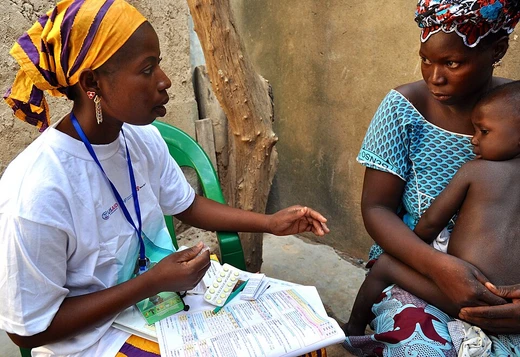
Public health
Science and art of preventing disease through organized societal efforts.

Public health is the science and art of preventing disease, prolonging life, and promoting health through organized efforts and informed choices of society, organizations, communities, and individuals. It is an interdisciplinary field that analyzes the determinants of health of a population and the threats it faces, encompassing physical, psychological, and social well-being. Public health is part of a country's overall healthcare system alongside primary, secondary, and tertiary care, and is implemented through surveillance of cases and health indicators, as well as the promotion of healthy behaviors.
- field
- Public health
- known_for
- Preventing disease, prolonging life, and promoting health through organized societal efforts
- subfields
- Epidemiology, biostatistics, social sciences, environmental health, community health, behavioral health, health economics, public policy, mental health, health education, health politics, occupational
- scope
- From a handful of people to entire continents during a pandemic
- key_initiatives
- Hand-washing promotion, breastfeeding promotion, vaccination delivery, suicide prevention, smoking cessation, obesity education, condom distribution
Lore & Background
From the beginnings of human civilization, communities promoted health and fought disease at the population level. In complex, pre-industrialized societies, interventions designed to reduce health risks could be the initiative of different stakeholders, such as army generals, the clergy or rulers. Great Britain became a leader in the development of public health initiatives, beginning in the 19th century, due to the fact that it was the first modern urban nation worldwide. The public health initiatives that began to emerge initially focused on sanitation (for example, the Liverpool and London sewerage systems), control of infectious diseases (including vaccination and quarantine) and an evolving infrastructure of various sciences, e.g. statistics, microbiology, epidemiology, sciences of engineering.
Reader's Guide
Public health is significant as a foundational component of healthcare systems worldwide, addressing health at the population level rather than the individual level. Its interdisciplinary nature allows it to tackle a wide range of health determinants, from sanitation and infectious disease control to behavioral health and health equity. The field faces notable disparities between developed and developing countries, where public health infrastructures are still forming and may lack trained workers, monetary resources, or sufficient knowledge for basic medical care and disease prevention. A major concern in developing countries is poor maternal and child health, exacerbated by malnutrition and poverty. Developed nations are at greater risk of certain public health crises, including childhood obesity, although overweight populations in low- and middle-income countries are catching up. The legacy of public health includes the evolution of modern practices such as surveillance, vaccination, and health promotion, which continue to adapt to emerging threats and societal needs.
Did You Know?
- Public health can address populations as small as a handful of people or as large as an entire city, and during a pandemic it may encompass several continents.
- Common public health initiatives include promotion of hand-washing and breastfeeding, delivery of vaccinations, suicide prevention, smoking cessation, and distribution of condoms to control the spread of sexually transmi
- Great Britain became a leader in public health initiatives beginning in the 19th century because it was the first modern urban nation worldwide.
- There is a significant disparity in access to health care and public health initiatives between developed countries and developing countries, as well as within developing countries.
The Architecture of Surveillance Systems
Public health surveillance, as defined by the World Health Organization, involves the ongoing, methodical gathering, analysis, and interpretation of health data to guide planning, execution, and evaluation of public health efforts. At its core, these systems answer fundamental questions: when and where a health problem is occurring, and who is affected. They serve as early-warning mechanisms, allowing health authorities to spot emerging threats before they escalate and to deploy timely interventions. The operational design of surveillance splits into two broad categories. Passive surveillance relies on the routine, continuous reporting of diseases and conditions from every health facility within a defined territory. This approach is economical and less demanding in terms of staff time, though it carries the persistent risk that some cases go unreported. Active surveillance, by contrast, involves health workers physically visiting facilities, reviewing medical records, and interviewing providers to hunt for a particular disease or condition. This more intensive method is typically reserved for epidemic situations or when a specific disease is the target of an elimination campaign.
Institutional Frameworks and Disease Tracking
Large public health organizations have built extensive infrastructure to monitor infectious disease threats. Beyond infectious diseases, many regions and countries maintain dedicated cancer registries that monitor the incidence of various cancers to determine their prevalence and investigate possible underlying causes. More recently, the scope of epidemiologic databases, often called disease registries, has expanded to include one-time events like stroke, chronic conditions such as diabetes, and even social problems like domestic violence. Governments conduct cost-benefit analyses on these registries to determine how much funding to allocate toward research and prevention efforts.
Syndromic Surveillance and the Bioterrorism Imperative
Syndromic surveillance represents a critical evolution in public health monitoring, focusing on detecting or anticipating disease outbreaks before definitive diagnosis. The CDC defines it as surveillance using health-related data that precede a formal diagnosis yet signal a sufficient probability of a case or outbreak to warrant further public health response. The rationale is straightforward: the first signs of an outbreak or a bioterrorist attack may not come from a physician's diagnosis or a laboratory result. Consider a typical influenza outbreak. Some individuals call in sick to work or school, others visit a pharmacy for over-the-counter medicine, some see their doctor, and others with severe symptoms dial emergency numbers or present at an emergency department. Syndromic surveillance systems monitor all of these data streams—school absenteeism logs, emergency call records, over-the-counter drug sales, Internet searches, and more—to detect unusual patterns. When a spike appears, epidemiologists and public health professionals are alerted. Early awareness and response to a bioterrorist attack, in particular, could save many lives and potentially slow or stop the spread of an outbreak.
The Digital Revolution in Health Monitoring
The digital age has transformed how public health surveillance operates. Search-based trends on platforms like Google and Wikipedia, social media posts on Facebook and Twitter, and participatory surveillance websites such as Flu Near You and Influenzanet have all become important data sources. The range of usable data has expanded as more areas of life become digitized; today, school attendance records, hospital emergency admissions data, and even retail sales figures can feed into syndromic surveillance. Search trends offer indirect signals about public health, while the latter categories provide more direct data. The tool interpreted more flu-related searches as a sign of higher flu activity, and its results, published in Nature, closely matched CDC data while leading it by one to two weeks. However, the original modeling approach later proved to have significant deficiencies. Researchers at the University of Bristol's Intelligent Systems Laboratory extended this line of work by creating Flu Detector, an online tool that uses information retrieval and statistical analysis of Twitter content to nowcast flu rates in the United Kingdom.
Frequently Asked Questions
Who is Public health?
Public health is the collective science and practice of keeping populations healthy by preventing illness, extending lifespans, and encouraging well-being through coordinated action by societies, organizations, and individuals. It sits alongside primary, secondary, and tertiary care as a core pillar of any nation's healthcare system.
What are Public health's powers/role?
Its core abilities include disease surveillance, tracking health indicators, and promoting behaviors like hand-washing, breastfeeding, and vaccination delivery. It operates across a spectrum from small communities to entire continents during a pandemic.
How does Public health's story end?
Public health has no fixed ending because it is an ongoing, evolving discipline rather than a single narrative arc. Its story continues as long as new threats emerge and societies must adapt their organized efforts to protect collective well-being.
Why is Public health important?
It addresses the physical, psychological, and social determinants of health at a population level, filling gaps that individual medical care cannot. Without its organized, community-wide strategies, preventable diseases would cause far greater harm.
What subfields does Public health encompass?
The field draws from epidemiology, biostatistics, environmental health, behavioral health, health economics, public policy, occupational health, and health education, among others. This interdisciplinary blend lets it tackle threats from multiple angles simultaneously.
More in Public Health And Epidemiology 1-19
Spotted an error? Know more?
This is a living reference — every entry is fact-audited, and reader corrections feed straight into our audit queue. Suggest an edit · See this site's audit record