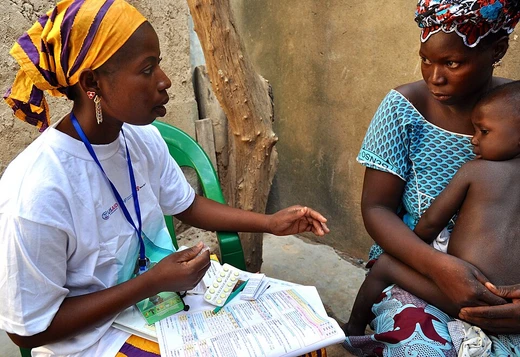
Vaccination
Vaccination primes the immune system to prevent infectious disease.

Vaccination is the administration of a vaccine to help the immune system develop immunity from a disease. Vaccines contain a microorganism or virus in a weakened, live or killed state, or proteins or toxins from the organism. In stimulating the body's adaptive immunity, they help prevent sickness from an infectious disease. When a sufficiently large percentage of a population has been vaccinated, herd immunity results, protecting those who may be immunocompromised and cannot get a vaccine because even a weakened version would harm them. The effectiveness of vaccination has been widely studied and verified, and it is the most effective method of preventing infectious diseases.
- diseases_eradicated_or_eliminated
- smallpox (worldwide), polio (much of the world)
Lore & Background
The first disease people tried to prevent by inoculation was most likely smallpox, with the first recorded use of variolation occurring in the 10th century (Song Dynasty) in China. It was also the first disease for which a vaccine was produced. He was the first to publish evidence that it was effective and to provide advice on its production. Louis Pasteur furthered the concept through his work in microbiology. The immunization was called vaccination because it was derived from a virus affecting cows (Latin: vacca 'cow'). Smallpox was a contagious and deadly disease, with a general case fatality rate of around 30% overall, though rates were higher in specific age groups such as infants under one year. Vaccination and immunization have a similar meaning in everyday language, distinct from inoculation, which uses unweakened live pathogens. Most vaccines are administered before a patient has contracted a disease, but some are given after exposure, such as the rabies vaccine first given by Louis Pasteur to a child after a rabid dog bite. Vaccines are typically given by injection, though live attenuated polio, rotavirus, some typhoid, and some cholera vaccines are given orally. A vaccine failure occurs when an organism contracts a disease despite vaccination, often due to individual variations in immune response rather than a defective vaccine. Vaccination efforts have been met with some reluctance on scientific, ethical, political, medical safety, and religious grounds, although no major religions oppose vaccination, and some consider it an obligation due to the potential to save lives. In the United States, people may receive compensation for alleged injuries under the National Vaccine Injury Compensation Program. Early success brought widespread acceptance, and mass vaccination campaigns have greatly reduced the incidence of many diseases in numerous geographic regions.
Reader's Guide
Vaccination is a cornerstone of public health, widely studied and verified as the most effective method of preventing infectious diseases. Its significance is underscored by the worldwide eradication of smallpox and the elimination of diseases such as polio and tetanus from much of the world. Herd immunity, achieved when a sufficiently large percentage of a population is vaccinated, protects immunocompromised individuals who cannot receive vaccines. However, some diseases have seen rising cases due to relatively low vaccination rates attributable partly to vaccine hesitancy. Vaccines undergo rigorous testing before approval, including cell culture modeling, animal studies, and three phases of human trials. Regulatory authorities such as the US Food and Drug Administration extensively review clinical trial results, safety tests, and manufacturing methods before licensing a vaccine for public use. The US Centers for Disease Control and Prevention lists vaccination as one of the ten great public health achievements of the 20th century in the US. While some vaccines, like the smallpox vaccine, prevent infection and can lead to sterilizing immunity, others, including those for COVID-19, help lower the chance of severe disease without necessarily preventing infection.
Did You Know?
- The term 'vaccination' comes from the Latin word 'vacca' meaning cow, because the smallpox vaccine was derived from a virus affecting cows.
- Vaccination prevents 2–3 million deaths per year according to the World Health Organization.
- Serious side effects from vaccination are very rare.
Frequently Asked Questions
Who is Vaccination?
Vaccination is the deliberate introduction of a vaccine into a person's body so that their immune system can build lasting defense against a particular disease. It essentially trains the adaptive immune response by exposing it to a harmless form of the pathogen or its components, without causing the illness itself.
What are Vaccination's powers/role?
Its core ability is priming the body's adaptive immunity to recognize and neutralize an infectious agent before that agent can make the person sick. Depending on the formulation, the vaccine may carry a weakened or inactivated microorganism, viral proteins, or inactivated toxins that trigger this protective training.
How does Vaccination's story end?
The narrative reaches its climax when a large enough share of a community has been immunized, producing herd immunity that shields those who cannot safely receive even a weakened vaccine, such as immunocompromised individuals. This collective layer of protection is the ultimate outcome the process is designed to achieve.
Why is Vaccination important?
It stands as the single most impactful public-health intervention for preventing infectious disease, with a proven record of eradicating smallpox worldwide and eliminating polio from most regions. Its real-world effectiveness has been confirmed through extensive study across diverse populations.
What's in Vaccination's 'arsenal'?
The specific contents vary by product but typically include a live-attenuated or killed pathogen, isolated surface proteins, or inactivated toxins derived from the target organism. Each ingredient is chosen to provoke a robust immune memory without reproducing the original disease.
More in Public Health And Epidemiology 1-19
Spotted an error? Know more?
This is a living reference — every entry is fact-audited, and reader corrections feed straight into our audit queue. Suggest an edit · See this site's audit record